
Unlocking the Power of Poker Straddle: A Comprehensive Strategy Guide
Understanding poker straddle is key to elevating your live cash game tactics. The “poker straddle” — a voluntary blind bet made before the cards are dealt — changes the betting dynamics significantly, adding layers of strategic complexity for both beginners and seasoned players.
What Is a Straddle in Poker? Mechanics and Participants
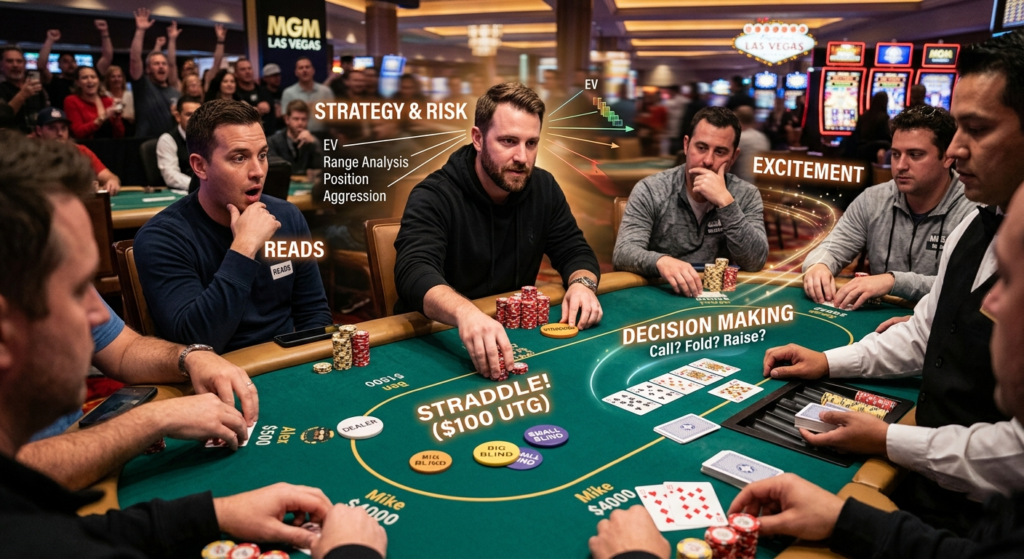
A poker straddle usually involves a player placing a bet twice the big blind before seeing their cards, effectively acting as a third blind. This bet is typically made by the player “under the gun” (UTG), the first to act pre-flop, but straddling from other positions such as the button is also common in some games.
The mechanics are straightforward but impactful: the straddler gains the privilege of acting last pre-flop, which can confer strategic advantages. However, the option to straddle is often governed by house rules whether in cash games or tournaments, so it’s vital to check official poker rules on straddling at your venue.
Who Can Straddle? Varied Contexts and Game Types
Straddling is primarily a feature of live cash games rather than tournaments. Some casinos allow straddling only from the UTG position, while others permit straddles from later positions or multiple straddles per hand, known as “double straddles”. The permissibility and commonality of straddling vary widely.
In tournaments, straddling is less prevalent and sometimes prohibited because of the forced bet’s disruptive impact on stack sizes and tournament flow. It’s important for players to understand the specific rules before attempting straddles in these formats.
Pros and Cons of Straddling in Poker
- Pros: Straddling can increase the size of the pot pre-flop, creating opportunities for bigger wins. It also pressures opponents by escalating the stakes immediately. Acting last pre-flop can offer strategic insight on opponents’ actions.
- Cons: It increases variance and costs the player more money upfront, potentially depleting the bankroll faster. Poorly timed straddles can be exploited by savvy opponents, leading to significant losses.
When to Straddle or Avoid It: Strategic Use Cases
Straddling effectively requires nuanced judgment. Advanced players consider factors such as position, stack depth, table dynamics, and opponent tendencies. UTG straddles are more aggressive, affecting the entire table’s action, while button straddles tend to be more tactical, leveraging the positional advantage.
Situations that might justify a straddle include when you have a deep stack relative to others, want to exploit conservative opponents, or aim to inject aggression in a passive game. Conversely, avoid straddling against loose players who will call frequently or when short-stacked to preserve your bankroll.
Advanced Strategic Implications: Psychological and Bankroll Considerations
Beyond mechanics, the act of straddling affects psychological gameplay—forcing opponents into more awkward decisions and altering their betting patterns. This unpredictability can benefit players adept at reading opponents and table flow.
Bankroll management is crucial. Because straddling inherently inflates variance due to larger forced bets, players must have a robust bankroll strategy to absorb swings without jeopardizing long-term play.
Connecting Straddle Strategy to Broader Poker Concepts
Knowing how a poker straddle interacts with concepts such as Stack-to-Pot Ratio (SPR), betting structures, and variance enhances decision-making. For instance, high SPRs post-flop in straddled pots can demand more precise post-flop play because pots are bigger and stacks deeper.
For players seeking advanced strategic insights, Upswing Poker provides in-depth articles that deepen understanding of these concepts.
Exploring AI-Driven Poker Tools and Related Strategies
While straddling is a primarily live game tactic, online and AI-driven tools increasingly influence poker strategy. Similar to how Stake Mines predictor software leverages algorithms to optimize betting decisions in casino games, AI has potential applications in poker for pattern recognition and opponent modeling.
Linking awareness of these trends enhances overall strategy literacy and allows poker players to stay ahead in the evolving landscape of gambling optimization.
Conclusion: Is Straddling Right for Your Poker Game?
Mastering poker straddle requires balancing strategic risk and reward. It is a powerful tool in the right hands—offering control over pot size, pressure on opponents, and positional benefits when used judiciously. Yet, it comes with higher variance and bankroll risk that players must manage carefully.
For those looking to deepen their poker strategy portfolio, exploring both foundational aspects and psychological effects of straddling can yield significant competitive advantages.
Have you tried incorporating straddle poker strategy into your game? Share your experiences or questions on forums such as Flop Turn River where seasoned players discuss nuances and advice.